Specifying Commercial Bar Stools for Restaurants and Hotel Bars
Posted by Mondo Contract on Nov 20th 2026
A bar stool carries more of a project than its size suggests. It sets the rhythm of the counter, takes the hardest wear in the space, and is the first piece a guest touches. Specified well, it disappears into the experience. Specified badly, it shows within a season: loose joints, worn footrests, knees against the counter apron.
The decisions below follow the order we use with design teams: counter first, then frame, back, movement, upholstery and the outdoor or stacking requirements of the project.
Start at the counter
Seat height follows the counter, not the catalog. Bar counters run 40 to 42 inches (102 to 107 cm) and take a seat of about 29 to 31 inches (74 to 79 cm). Counters at 36 inches (91 cm) take a seat of about 24 to 26 inches (61 to 66 cm). Between the seat and the underside of the counter, allow 10 to 12 inches (25 to 30 cm).
Measure the underside, not the top. Aprons, corbels and footrails eat into knee space and are often missing from the presentation drawings. Most of the stools we supply come in both bar and counter height, so one model can run from a bar to a lower dining counter in the same project.
Then set the spacing. Plan 24 to 26 inches (61 to 66 cm) center to center for armless fixed stools, and 28 to 30 inches (71 to 76 cm) for swivels and stools with arms. Keep at least 36 inches (91 cm) of clear circulation behind seated guests, more where service runs behind the bar. Lay the stools out occupied, pulled out and turned; a count set from an empty plan is almost always one or two too many.
Wood or metal frame
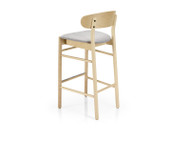
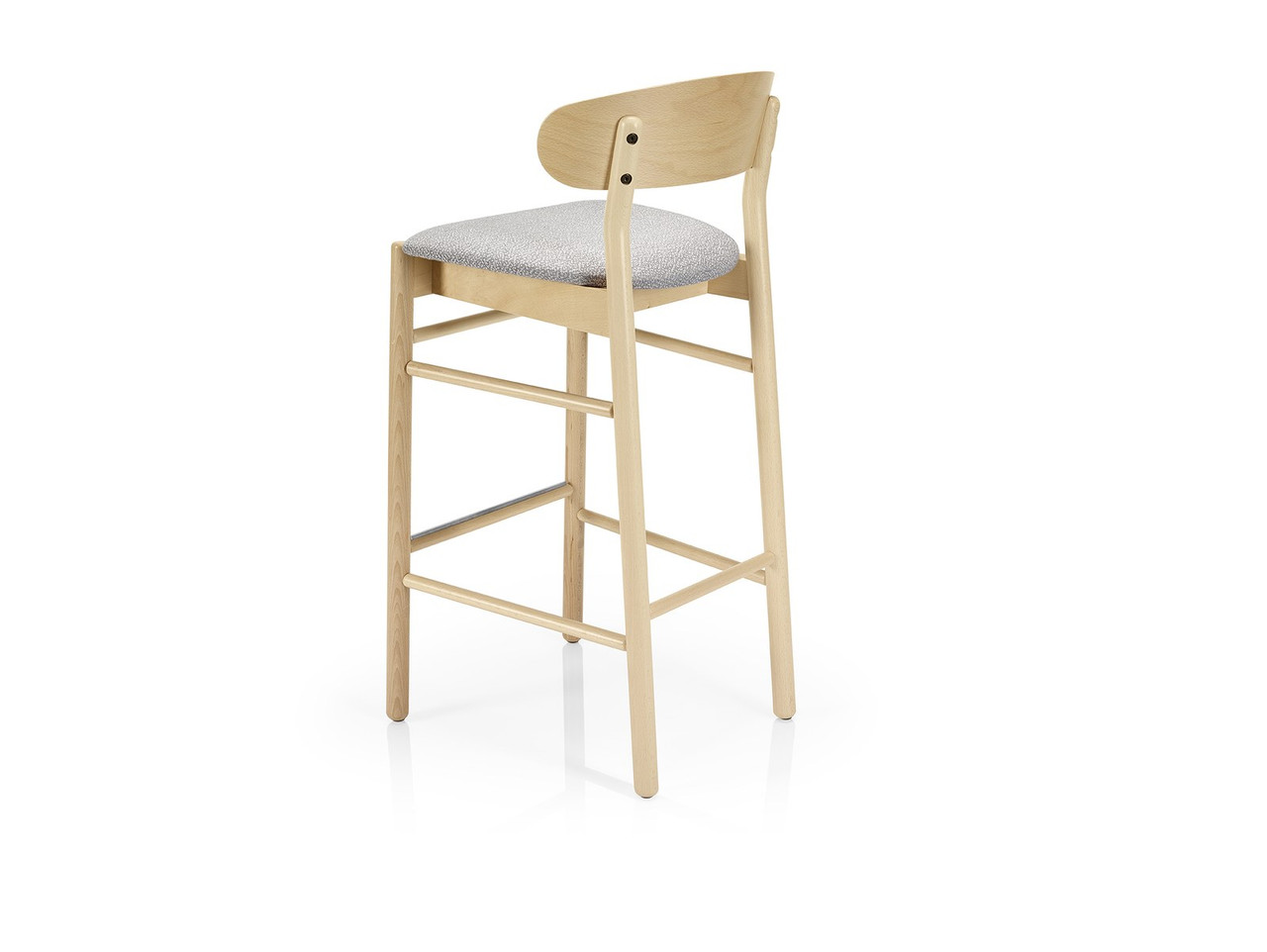
Solid beech is the standard for wood contract frames: dense, stable, and able to hold a joint under the racking load of guests climbing on and off all evening. The Camille Stool is built this way, on a solid beech frame with a brushed stainless steel footrest, with an upholstered or wooden seat at 30.3 inch (77 cm) bar height or 25.6 inch (65 cm) counter height. A restaurant can carry one silhouette from the bar to the dining counter.
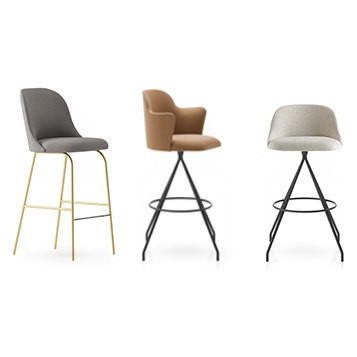
Where the design calls for metal, the Aleta Stool sets a molded plywood seat and back, padded and upholstered, on a lacquered steel base with an integrated footrest. Steel suits high-turnover bars and narrower profiles; wood suits dining-led interiors where the stool reads as furniture.
The footrest takes more abuse than any other part: heels, bags and cleaning carts all land on it. Specify metal there even on a wood stool, as on Camille, and check how it is fixed to the legs before the sample is approved.
Back or backless
A back keeps guests longer and in better posture; it also adds visual height along the counter. For full meal service at the bar, specify a back, and consider a high back where guests stay for a full meal. Aleta is offered with a low or high back, and with optional armrests.
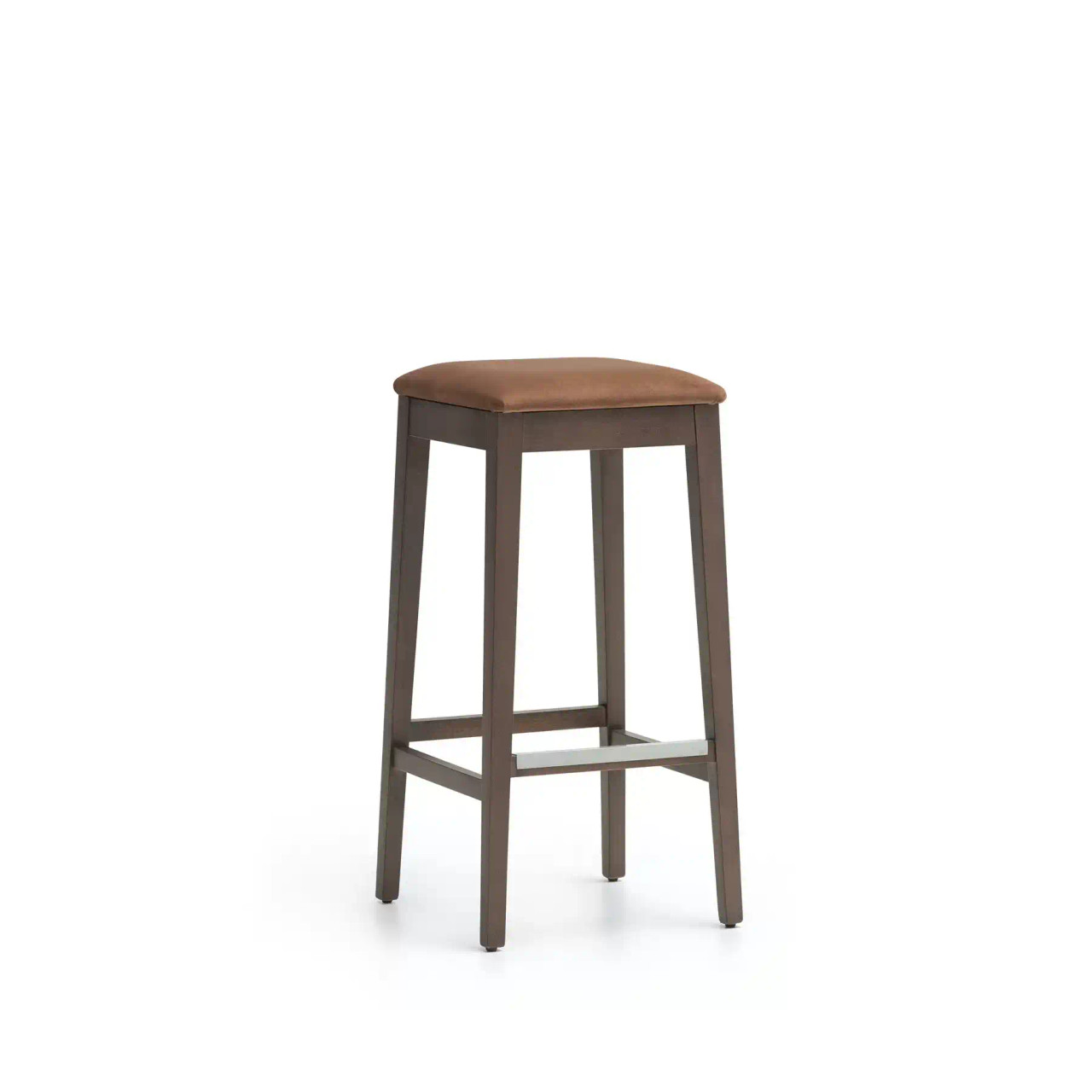
For quick-turn counters, coffee bars and spaces where sightlines across the counter matter, a backless stool keeps the line low. The Ivar Stool keeps the counter edge clear: no backrest, and a padded seat in fabric, leather or COM.
Fixed or swivel
Swivel bases suit social bars and hotel lobbies where guests turn between the counter and the space behind them. They also introduce a mechanism, so specify a commercial-grade base and plan for it in maintenance. Aleta is available on either a fixed four-leg base or a swivel base, at bar and counter height, so one design can run through a hotel bar and its lobby lounge. Where a swivel stool has arms, check that the arm clears the counter edge when the seat turns.
Fixed stools remain the default for restaurant dining counters: fewer moving parts, a quieter line, and nothing to tighten. Arms and swivel together need the wider spacing given above.
Upholstery and finish
For hospitality seating, specify upholstery rated to at least 100,000 double rubs (Wyzenbeek), and confirm California TB 117-2013 compliance for upholstered pieces. Bar seats see food, drink and denim; performance-coated fabrics or leather outlast standard textiles. Every upholstered stool in this article is available in fabric, leather or COM, so the stool can match the banquettes and dining chairs exactly.
Wood finishes should be matched to the millwork sample, under the project lighting, before production. A stain approved on a screen rarely matches the bar front.
Outdoor and stacking
Terrace bars need a different construction: aluminum frames, anodized or painted, and no foam that holds water. The Porto Stool has an aluminum frame, silver or color anodized, painted or hammered, with a 30.7 inch (78 cm) seat height. It is rated for indoor and outdoor use, from dining spaces to terraces and pool decks.
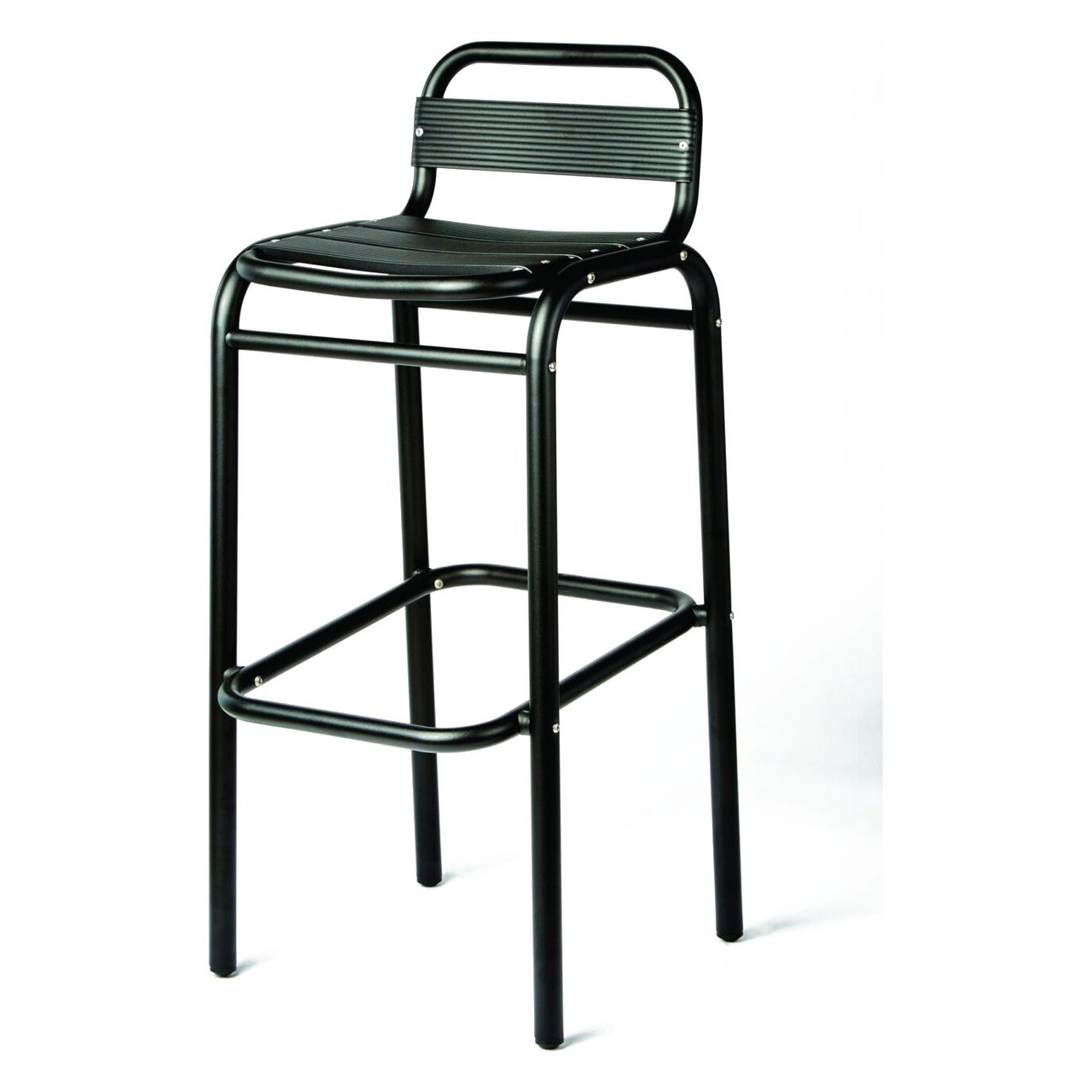
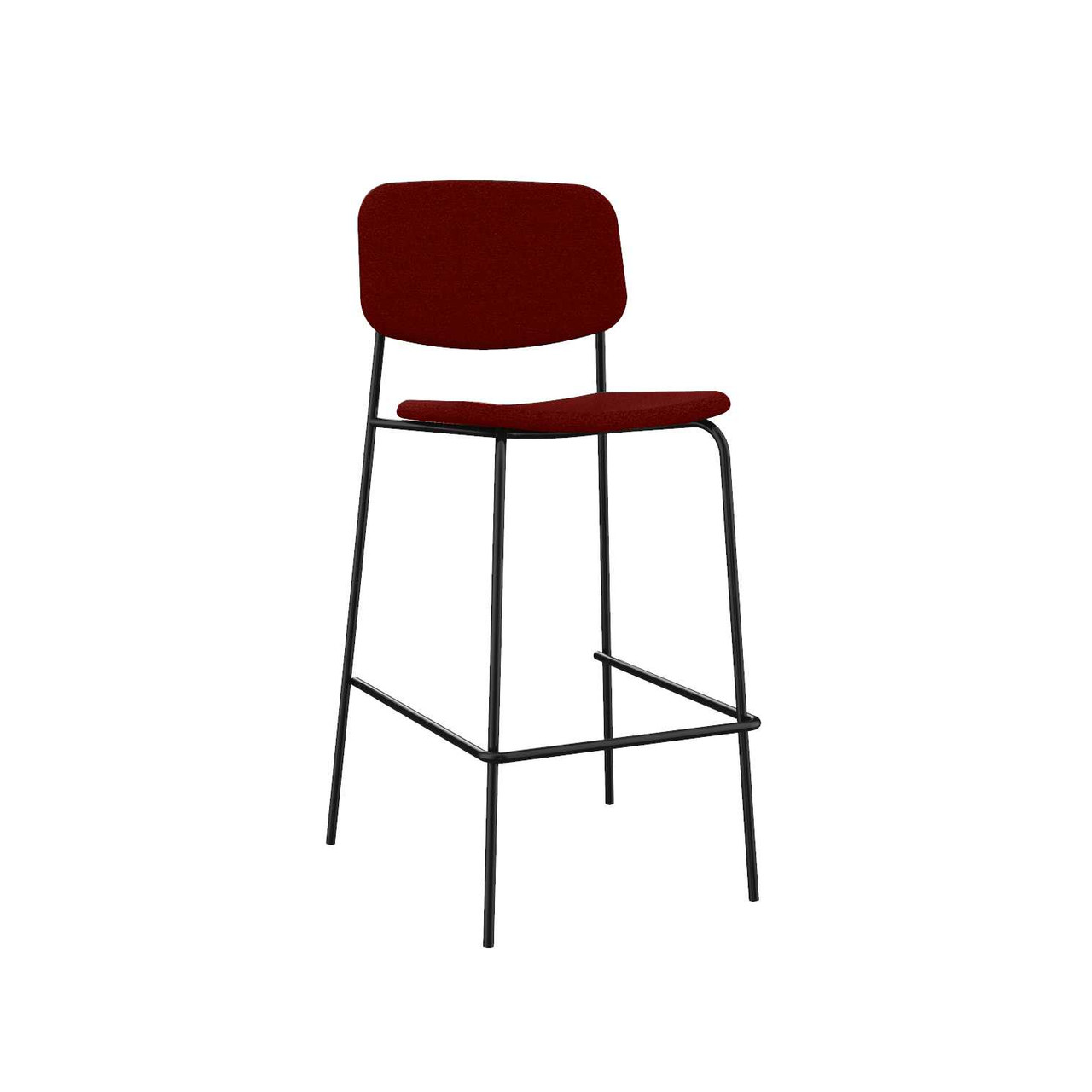
Where stools must clear for events or cleaning, stacking saves storage. The Cap Barstool stacks on a four-leg frame in 16 x 2 mm tubular steel and comes in 65 cm and 75 cm (25.6 and 29.5 inch) seat heights for counters and bars, with an upholstered seat and back on a molded plywood core.
Working with Mondo Contract
Every stool above is made to order, with frame finish, upholstery and height specified per project. Our team handles finish samples, COM processing, shop drawings and phased delivery. For trade pricing and lead times, contact the project team at info@mondocontract.com.