
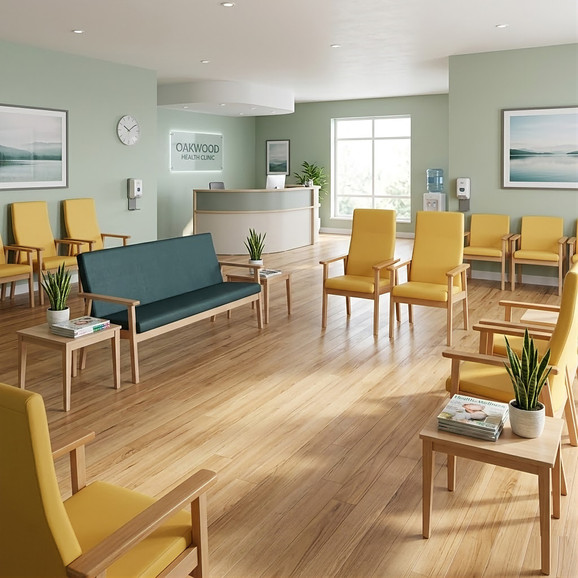
Medical Office Furniture: What the Specification Actually Requires
Posted by Mondo Contract on Jun 16th 2026
Material Performance Under Healthcare Conditions
Upholstery selection in medical waiting areas and consultation rooms is not primarily an aesthetic decision. Seam-welded or heat-sealed vinyl and antimicrobial-treated textiles rated for repeated chemical disinfection are the baseline in any environment where infection control protocols are active. Open-weave fabrics and tufted upholstery, appropriate in hospitality contexts, introduce contamination risk in clinical settings. Frame construction matters here too: powder-coated steel and solid hardwood with sealed finish surfaces resist the moisture exposure that comes with routine cleaning cycles better than laminate or open-grain wood.
The Dortmund Collection: Construction and Configuration
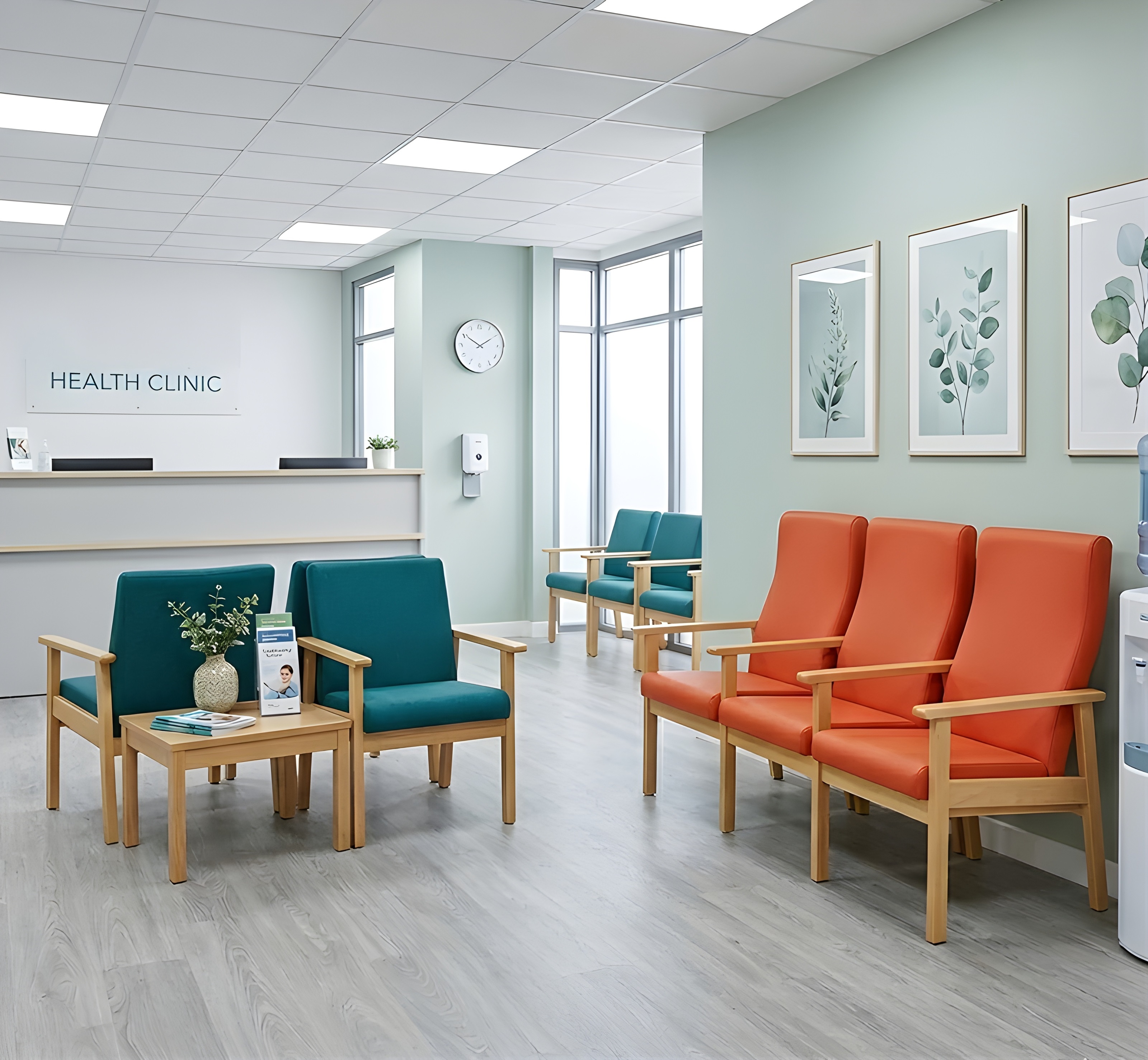
The Dortmund seating collection, available through Mondo Contract, is built on a solid beechwood frame, a structural choice that holds up under the repeated loading and repositioning typical of high-traffic waiting environments. Beechwood's density and closed grain make it resistant to the stress fractures that develop over time in lower-grade hardwoods used in contract seating. The collection's upholstered seat and back are available in customizable finishes, allowing specifiers to align material selection with both the infection control requirements of the facility and the ambient design language of the space. For medical office applications, specifying a vinyl or antimicrobial textile within the Dortmund's upholstery options addresses durability and compliance simultaneously.
ADA and Accessibility Requirements in Waiting Room Configuration
Seat height is a specification variable that carries compliance implications in healthcare environments. ADA guidelines recommend seat heights between 17 and 19 inches to support independent transfer for patients with mobility limitations, and clear floor space of at least 30 by 48 inches must be maintained adjacent to accessible seating positions. Furniture arrangement in waiting areas also needs to account for wheelchair turning radius, which requires a minimum 60-inch clear circle or T-shaped space within the circulation path. These are not discretionary considerations in a medical office serving a general patient population; they are baseline requirements that affect furniture quantity, placement, and specification.
Workflow and Staff Environment Considerations
The seating environment that patients occupy is only part of the specification scope in a medical office. Staff-facing furniture, including reception counters, task seating, and storage, needs to address ergonomic standards for personnel who spend extended hours at fixed positions. Height-adjustable work surfaces that accommodate both seated and standing postures are increasingly standard in new healthcare buildouts and renovation projects, and they affect how the overall floor plan is organized. Mobile storage and reconfigurable elements allow clinical staff to adapt spaces between different appointment types without permanent layout changes, which matters in practices that handle both standard consultations and procedures requiring different clearance and equipment access.
Specifying for Patient Experience Without Sacrificing Performance
In competitive urban medical markets, the waiting area functions as a direct signal of the quality of care a practice provides. Patients read the environment before they read the staff. Seating that is visually refined, structurally stable, and maintained in good condition communicates competence in a way that purely utilitarian furnishing does not. The Dortmund collection addresses this through its beechwood construction and upholstery customization range, allowing specifiers to hold both the performance floor and the aesthetic register required in a well-designed clinical environment.
Mondo Contract works directly with architecture and interior design firms on healthcare and commercial specifications, with made-to-order production and trade pricing available through mondocontract.com. Project support is available for FF&E schedules that require coordination across multiple furniture categories within a single delivery timeline.