
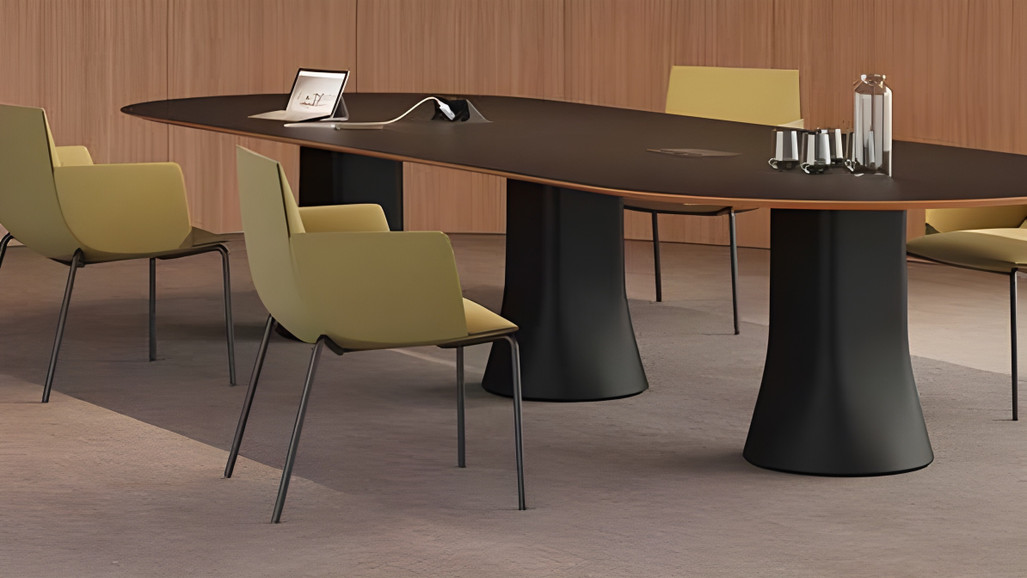
Conference Room Table Customization for Commercial Interiors
Posted by Mondo Contract on May 13th 2026
The Cambio conference room table is often the most prominent surface in a client-facing space, which makes it a legitimate brand touchpoint. For commercial projects ranging from corporate headquarters to boutique hotel boardrooms, made-to-order table customization lets designers and specifiers control material, finish, dimension, and surface detail within a single production run. This guide covers how that process works in practice.
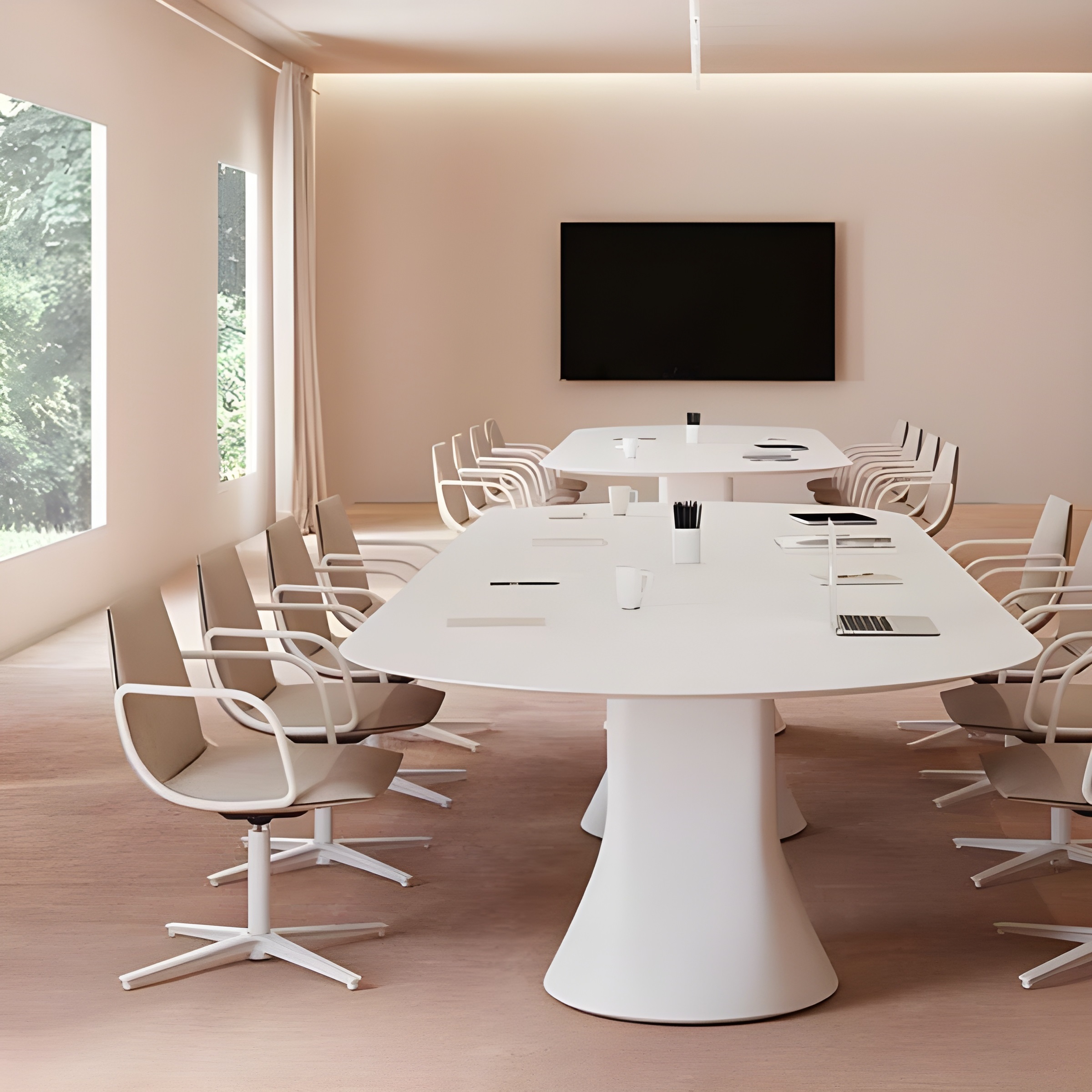
Step 1: Explore customization options
Made-to-order conference tables are configurable across four primary variables: top material and finish, frame material and color, table geometry, and integrated technology provisions. Top materials available through contract-grade production include solid wood, book-matched veneer over engineered substrate, HPL laminate, Fenix NTM, ceramic, and solid surface composites such as Corian. Frame finishes are typically specified by RAL or NCS reference in powder-coat, or by metal type for brushed and polished stainless or blackened steel.
Table geometry — length, width, shape, and edge profile — is defined at the specification stage and fixed before production begins. Non-standard shapes such as boat, racetrack, or L-configurations are available but require confirmed room dimensions before sign-off, as post-production adjustments are not possible with solid or veneered tops..
Step 2: Define your branding needs
Before approaching a manufacturer or supplier, the specifier needs to resolve four things: the confirmed color references (RAL, NCS, or Pantone to CMYK/RAL conversion for powder-coat matching), any surface inlay or logo requirements, the room's floor plan with fixed dimensions, and whether the table needs to meet a specific technical standard — for example, BIFMA compliance for North American projects or EN 527 for European office environments.
Brand color matching in powder-coat is achievable to within a close tolerance of most standard references, but gloss level is an independent variable — the same RAL color reads differently at matte, satin, and gloss. Request physical samples in the specified gloss level before approving the finish, as screen and printed representations are not reliable for final sign-off.
Step 3: Consult with a design expert
Mondo Contract's project team works directly with interior designers, architects, and procurement managers on made-to-order specifications. The consultation covers material selection with physical samples, finish approval against brand references, ergonomic parameters (standard table height is 74–76cm; seated ADA-compliant clearance requires a minimum 68cm floor-to-underframe), and confirmation of any tech integration — cable management routing, pop-up module cutout positions, and wire exit points are all defined before production drawings are issued.
For hospitality and multi-unit residential projects, the team can coordinate phased delivery schedules to align with site readiness across floors or buildings, which is relevant for FF&E packages where the conference furniture arrives as part of a larger installation sequence.
Step 4: Review and approve the customization plan
The approval stage covers production drawings, material and finish samples, and confirmation of technical specifications before the order enters the manufacturing queue. Changes requested after production sign-off are generally not accommodable on made-to-order items — this is standard across contract furniture production and applies regardless of supplier.
Lead times for made-to-order conference tables through Mondo Contract's European manufacturing partners typically run eight to fourteen weeks from approved drawings, depending on material complexity and current production schedules. Trade clients have access to project pricing, dedicated account support, and sample lending for client presentations. Contact Mondo Contract's specification team to open a trade account or request a project quote.
For contract purposes, the distinction between solid wood and veneer over an engineered core matters: a 0.6mm rotary-cut veneer over MDF will move and crack at joints within a few years in air-conditioned environments. Specify a minimum 2mm sliced veneer, preferably book-matched, over a cross-banded substrate to achieve the appearance of solid wood with better dimensional control.